Thursday, April 18, 2013

Big Questions


Pammy Brenner submitted a bunch of questions to the blog - here are some responses:

Hello Pammy,

These are wonderful questions. I’ll try to address each one but the most important thing I’ll do is direct you to sources which will be far more helpful.

1. How does one reconcile science with Torah? To what degree can one accept scientific beliefs?

This is a broad sweeping and  great question and one that all religions in the world (most likely the majority of people on Earth) have to address.

Paraphrasing a friend of mine getting a PhD in cell biology in NYU, there are many theories raised and rejected in scientific research. Many “facts” are later disproven. So, it’s important to think of science as a dynamic area rather than something fixed.

Also, some areas of science work beautifully with the Torah and other areas of science pose, at least at first glance, a challenge to Torah. The scientific fact that the moon waxes and wanes and the sun setting work fine with the Torah. But the age of the universe, evolution, and miracles do require some more thought.

Let me be clear, there are many sophisticated and learned Jews who believe in science and the Torah. I do strongly believe one can reconcile or live comfortably in both worlds.

Before I go on I urge you to watch the debate at this link. The debate is between R. Lord Jonathan Sachs, the chief rabbi of England, and Richard Dawkings, a scientist and ardent and public atheist. Although they raise many fascinating issues their central debate is about if or how science and religion can coexist. 

I’m going to address three of what I believe to be the most challenging religion-science issues:

1.      Age of the Universe: to quote people smarter than I (maybe R. Lord Jonathan Sachs) science tells humanity the “what” and “how” and religion tells humanity the “why.” Or, to put more poetically: science tells humanity how we got here and religion tells humanity what to do once we’re here. Hence, the goal of prakim 1-2, the creation story, in Sefer Bereshit, is not to tell us how single celled organisms became dinosaurs but rather it is meant to teach us values and religious messages.

Why would G-d mislead us and tell us the world was created in seven days if it wasn’t? I don’t have a definitive answer but four thousand years ago a more detailed version may have been too confusing, or to convey the values most effectively a shorter seven day version of creation was necessary. But, most centrally, once one makes the paradigm shift that the Torah isn’t primarily concerned with science this becomes a less bothersome question.

2.      Evolution: This answer is for evolution but also for the age of the universe question. We believe that the world is 5773 years old. However, science declares that the world and the evolution of humanity took billions and millions of years respectively. One approach is to claim that each day of early creation was really a stage of creation. So, while we have 5773 years, that is from a point when Adam had evolved from some less developed being. Hence, billions of years may have elapsed from day one to day six.

3.      Miracles: There seem to be two schools regarding how to understand miracles. Some rationalistic thinkers claim that G-d may have woven miracles into the natural order. This seems to have great support from the Mishna in (Avot 5:6) where it says that G-d created certain miracles right before the end of the six days of creation. If so, while miracles break the normal order they do not break the natural order. A more common approach is that indeed G-d who created the world can suspend elements of the natural order in certain instances. I don’t think that this needs to be a fundamental conflict. One can champion miracles and still, in 99% of cases, believe that science guides the world.

It should be noted that the answers above assume that one need not reconcile the conflict. However, there are number of Jewish scientist who attempt to fully reconcile science with religion.

Here are some books to read which adopt the “reconcile” approach:
1.      Dr. Gerald Schroeder- Genesis and the Big Bang, The Science of God and The Hidden Face of God

3. How closely should we follow the Torah Umadda philosophy? How much "Madda" are we allowed to let into our daily lives? How much are we supposed to incorporate into our Torah views of the world?

Early on in my years at Gush I spent a Shabbat with a friend who was in a yeshivish yeshiva. This was a yeshiva that looked very unfavorably upon general studies. On Friday night I ate by the head of the yeshiva. Immediately, upon telling him that I was learning at Gush, he commented in a mocking tone: “Oh, the literature yeshiva!” I was shocked but I learned, and since then I’ve come to see it more clearly, that most religious Jewish communities look down upon college education and are staunchly opposed to non-practical general studies, English, history, etc.

Over the years my understandings and feelings of this topic have evolved but I think what I experientially knew to be true in high school is what guides my thinking about this topic today.

People often begin this conversation the wrong way. People ask: is it muttar or assur to read Shakespeare? The starting point should be different: how can you be the best human you possibly can be? And, of course, “the best human” from an Orthodox perspective means having a deep relationship with G-d.

However, what does it mean to have a relationship with G-d? I won’t fully answer it now but it must include becoming the best person possible. A person who is deep and passionate and caring and honest etc. etc. etc.

How do you get there? For some this means full time learning. For others it means chessed. For others it means making tons of money and giving it all to tzedakah. For others it means maddah.

There is no chiyuv to learn maddah. And in fact, for many people I wouldn’t push them to learn maddah. But I do believe that many of those people could gain from maddah. Maddah is a way to work both the mind and heart in powerful ways.

It is clear, however, that Torah is both the most direct way to a relationship with G-d and to the development of one’s humanity. And it is this point where people often start the conversation: How does one justify reading Shakespeare when a more direct root, Torah, exists? Each person must craft a meaningful and honest balance of Torah, the most direct way to reach G-d, and maddah, a less good way to reach G-d. Some people are wired in a way that hiking in nature creates inspired moments and others a beautiful poem.

Let me highlight this with two personal anecdotes:
1.      When I was younger I went with my family to Les Miserables (now it is something I wouldn’t do because of my understanding of the halachot of kol isha). While my guess is that most people know the storyline I’ll summarize it quickly. Jean Valjean, the protagonist, who suffered in prison for nineteen years for stealing a loaf of bread, is caught stealing from a kind Bishop who invited Valjean to spend the night with him. The Bishop defends Valjean against the police and, in a moving song which ends up inspiring Valjean to change his life, the Bishop sings: “What we have we have to share….” Chazal certainly speak about the value of generosity. But the Bishop’s (a Bishop mind you!) beautiful voice in the context of a very moving story allowed this phrase to impact me greatly. When I think about themes of chessed and giving this phrase comes to mind. I now know more sources and more halachot of chessed etc. but the emotional pull to do chessed comes in some part from what I experienced while watching Les Miserables.
2.      The Tannach and Gemarah are full of discussions about death and mourning. Some of them I know and some I don’t. However, reading Edgar Allen Poe’s The Raven gave me both intellectual and, more importantly, emotional insight into the haunting feeling of pining for a lost loved to return.

An amazing article which addressed this topic in a thorough and sophisticated fashion is R. Lichtenstein's "Torah U'Madda: Congruence, Confluence, and Conflict" printed in Judaism't Encounter with Other Cultures: Rejection or Integration? (1997).

Good luck,
R Yair Hindin

Tuesday, April 16, 2013

One More on Yom Hashoa

Here is a short film about a Holocaust survivor, who won an Osar for co-producing Schindler's List, going back to Auschwitz for the Bar Mitzvah he never had.

Sunday, April 14, 2013

Friday, April 12, 2013

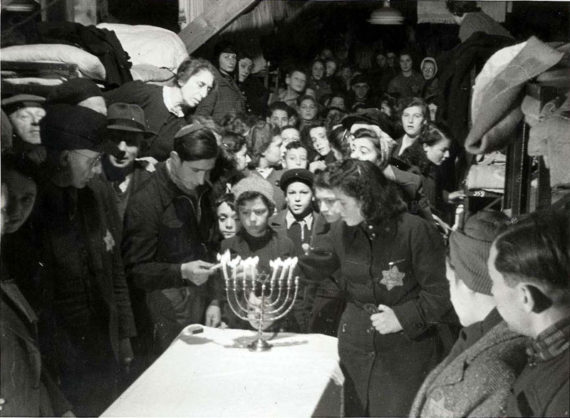
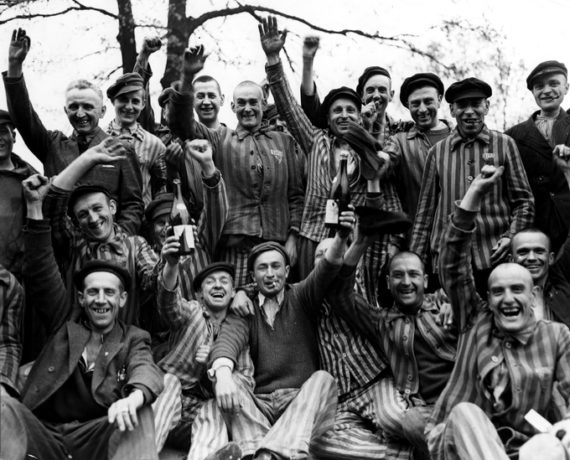
Not your Typical Holocaust Photos

lesson6_31MargaretBourke-campIt's a bit late after Yom Hashoah, but when Mrs. Sinensky sent me this link, I had to post it here.  Check these pictures out for a very different perspective than the one we are used to.  They are remarkable.

Sunday, March 17, 2013

Aiding Agunot


Maaynot alum Layla Blenden sends along this important message:


Stern College has an Aguna Advocacy club that was started because of Tamar Epstein, a Stern graduate, who has been trying to get a get from her husband for a while.
Tamar's husband, Aharon Friedman, has the support of his mother, and there have been many attempts to convince her to insist that Aharon give Tamar a get, but so far, to no avail. There have been numerous rallies outside of Yaffa Friedman's house in attempts to break her down (I attended one a few weeks ago).
There was an article published recently, called "An Agunah Day Message To A Jewish Grandmother," which describes a the effects of the traumas of an aguna on her child(ren), which also affects the child's relationship with her grandmother (the mother of the me'agen). This article describes the exact situation of Tamar Epstein.
In further attempt to convince Yaffa not to support her son in making Tamar an aguna, it ORA (organization for the resolution of agunot) is trying to get as many people as possible to send this article to Yaffa, in hopes that the influx of letters coming in her mail will convince her. (See links below)
Tizku l'mitzvot!
-Layla Blenden
You can join the event on facebook at http://www.facebook.com/events/157079137781530/
Event description:
Want to make your fast more meaningful? Ta’anit Esther is International Agunah Day. YOU can help free Tamar Epstein, whose ex-husband Aharon Friedman refuses to give her a get. How? By letting Yafa Friedman, Aharon’s mother, know that her full support of his abusive get refusal is NOT OK.
What you can do:
1) PRINT Dr. Levmore's article* http://tinyurl.com/YafaFriedmanArticle
2) WRITE a respectful letter of your own (optional)
3) SEND it to Yafa Friedman, 1812 E. 12th Street, Brooklyn NY 11229
*The Jewish Press recently published a moving article by Dr. Rachel Levmore entitled "An Agunah Day Message to a Jewish Grandmother." The article artfully addresses an anonymous mother of a recalcitrant husband, beseeching her to realize her responsibility to put her foot down and insist her son give his ex-wife a get lest she lose a true, loving relationship with her granddaughter down the road. But let's be real: this article is not speaking to some anonymous grandmother; it is clearly addressing Yafa Friedman. JOIN US in sending a loud and clear message to Yafa that her continued support of Aharon Friedman is unacceptable and that she holds a unique power to end this tragic saga.
YOU can help make a difference!


Monday, March 11, 2013

Torahton Schedule

An all-star lineup, hot off the presses! RSVP here.  See you there.


TORAHTON 2013
At Congregation Bnai Yeshurun - 641 West Englewood Avenue
Friday Night:
6:55-7:55: Mincha, Kabbalat Shabbat                            
8:00-9:15: Dinner, Zemirot, Divrei Torah  
9:15-10:00: Shiur by Rabbi Moshe Tzvi Weinberg
          Hachodesh Hazeh Lachem: The “Chiddush” of the Jewish People
10:00–11:30: Tish, Singing, Divrei Torah

Shabbat Afternoon:
3:30-4:25: Shiur by Rabbi Ari Zahtz
          Chrain or Romaine: Exploring the Bitter Possibilities
4:25-4:35: Snack / Break
4:35-5:25: Shiur by Mrs. Shira Schiowitz
Ancient Romance Novels? Is Shir Hashirim a Love Story?
5:30: Mincha
6:00-: Shiur by Yaffa Stone & Sara Kinstlinger
          Hilchot Superheroes: Real Halacha for Fictional Characters
6:40: Seudat Shlishit , Zemirot, Divrei Torah  
7:45: Maariv, Havdala

Torahton Memories

Here.  Let's make some new ones this weekend.

Torahton 2013 & Massive Mishmar!!!


Ma'ayanot's fourth annual Torahton will take place on Shabbat, March 15th – 16th, Shabbat Parshat Vayikra, in Teaneck, NJ. The students are invited to join us for this special opportunity to spend a Shabbat together that is filled with learning, friendship and fun. 

The Shabbaton begins on Friday night at Bnei Yeshurun with Kabbalat Shabbat and Maariv. The program continues with dinner, which will be followed by a shiur and an oneg. The Shabbaton will reconvene at Bnei Yeshurun on Shabbat afternoon with more shiurim and programming through seudah shlishit and havdalah.  All students are encouraged to attend the entire program, or any part that they wish. A detailed schedule will be available tomorrow.

In past years, one of the best parts of the program was the number of non-Teaneck residents who arranged to spend Shabbat at friends and participated in all of the programming.  If there is anyone who needs help finding a host, please let Rabbi Besser know. 

There is no charge for either of the meals or the rest of the program.  If you have any questions, please contact Rabbi Besser at (201) 833-4307 ext. 216 or besserd@maayanot.org.

If you plan to attend, please fill out the Google Doc here
 
We are especially excited this year to kick off the Torahton weekend with an exciting and interactive mishmar program on Thursday March, 14th right after school. A representative from the Kof-K will be coming in to address our students about contemporary kashrut issues. The program begins at 5:20 and will conclude by 6:15. Parents & alumni are welcome to attend! Light refreshments will be served.
Some of the topics include:
 
- Going into Starbucks or other non-exclusively kosher restaurants
- Can you buy ice cream or frozen yogurt from a chain store that has a hechsher but no mashgiach?
- Can you ever rely on the ingredients on a label to determine if something is kosher?
- Non-kosher gum and toothpastes
- Issues related to stadiums and street vendors (pretzels, chestnuts, etc.)
                                 And many more topics...

Poetry You Won't find in English Class

In that same issue of Jewish Action was an article about a Chassidic poet, Yehoshua November, whose work has received the highest acclaim in the broader poetry community.  Here's a sample:
The Purpose of this World
Yehoshua November
When some Jews cannot explain the sorrow of their lives
they take a vow of atheism.
Then everywhere they go,
they curse the God they don’t believe exists.
But why, why don’t they grab Him by the lapels,
pull His formless body down into this lowly world,
and make Him explain.
After all, this is the purpose of creation–
to make this coarse realm a dwelling place
for His presence.
From God’s Optimism

Sunday, March 10, 2013

Ma'ayanoter Does Good

From the current issue of Jewish Action (the OU's magazine), some good reading:

Hannah AshSixteen-year-old NCSYer from Teaneck, New Jersey and student at Ma’ayanot Yeshiva High School for GirlsThe hurricane was something so powerful, so awe-inspiring and so tragic, I knew I had to do something to help.8bI cleaned out someone’s basement in Seagate. I was pawing through someone’s stuff that was now trash, covered in disgusting grime and muck. Everything was off the shelves, piled on the floor, covered in sewerage and water. A man told me he had to throw out his grandfather’s Shas from Europe. It’s so unfortunate; so many memories, pictures, videos—ruined. I tried to treat all of the destroyed possessions with care.
All these people were standing outside talking about their homes and stores; people were trying to accept the damage and move on. [They’d say], “All this pain had to be for a reason; it came from Hashem. We need to clean up and move on.” They were trying to sound brave, but you could sense that if someone said the wrong thing, they would break down.
There’s something about the connection between one Jew and another. People in the community said, “I can’t believe so many came to help me. Go to this person, he needs help, she needs help.” It was really one house after the other. I felt exhausted, but also very fulfilled.
I really can relate to the emotion.  When I accompanied the 12th grade to help Nechama (a national disaster relief organization) clean up a Shul in Manhattan Beach I found myself separating water-saturated siddurim and chumashim from the non-sheimot debris.  I had to take a stack of the Rabbi's sermons, some nearly forty years old, and put them in a garbage bag; a life's work washed away in days.  Still, mixed in with the heart break of the work was a sense of purpose that I probably would not have gotten at the mall.  Great job Hannah - keep making us proud.

Sunday, February 3, 2013

Half Time Torah

YU's halftime show, with Charlie Harary and others.  

Hold on a Minute, G-d; I’ve got a Call on the Other Line


It was 7:30pm last Thursday evening, and the weather was cold and rainy.  As I crossed the plaza leading to the Kotel I breathed a sigh of relief.  Although the rain had stopped momentarily, it was still too wet for there to be more than about 10 women davening in the ezrat nashim.  I was pleased, because when I had been there for mincha a week earlier, the weather was beautiful and the Kotel was crowded, and I found it too distracting.  I had been disappointed, because after not having been at the Kotel for a year I had expected to find it more meaningful, but I was unable to focus on my davening because of the noise and the talking around me.  Which was one of the reasons I returned a week later, on a cold, rainy evening; I figured it might be the perfect time to find a quiet moment.

And indeed I was correct.  The Kotel was silent.  Most of the men were in the covered area at the left side of the Kotel, and the only sounds to be heard were the quiet pitter-patter of the raindrops that fell sporadically from the sky, and a gentle rustling as women turned pages in their siddurim nearby.  The darkness added to the feeling of privacy, and I felt very moved, standing there at the Kotel.  I don’t normally daven maariv, but that night I did, and it was a tefilla filled with kavana. 

I was in the middle of shemoneh esrei, aware that this davening was more meaningful than any I had said in a while, when my concentration was interrupted by the shrill ring of the cellphone of a woman a few feet from me.  Whether she didn’t want to interrupt her own davening, or whether it was just that she had difficulty extracting her phone from her pocket, the ringing went on for quite a few seconds before she silenced it.  And then her voice rang out loudly and clearly, “Hallo?  Ma nishma?...”  She stood there, one hand resting on the wet stones of the Kotel and one hand holding her phone to her ear, and had a conversation with the person on the other end.  Not bothering to whisper, seemingly unaware that her conversation was disturbing to everyone else. 

My concentration broken, all I could think was, “Really?  At the Kotel?  The closest place in the world to the Shechina, and she is talking on her cellphone?  Has she no decorum?  No sense of what is appropriate and what isn’t?”  Her conversation was not as brief as I expected for someone who was interrupted while talking to G-d, but then again, I expected that everyone silences their phone before they even enter that holy space, and she apparently did not share that same code of conduct.

Even after she finished talking and resumed her davening I was unable to regain my kavana.  I tried to focus on the words, but I was too disturbed by what I had just witnessed, and I ended up mumbling the rest quickly and just leaving. 

Later, still thinking about the incident I realized that what bothered me was twofold.  First, I was very disturbed by the fact that someone could desecrate the holiness of the place and of the experience of davening by talking on her phone.  But the second thing that bothered me was the disregard that she showed for everyone else.  Just because I am a teacher does not mean that davening comes easily for me.  I struggle with it like many people do.  Some days are easier, some days are harder; some days better, some days worse.  But when I’m trying to concentrate, it is really disturbing when someone nearby doesn’t let me.  Often times we only think of ourselves; if we are finished davening, or aren’t really interested in davening, we think nothing of turning to our friend and starting up a whispered conversation.  After all, we’re done, and we might as well pass the rest of the time in an enjoyable way.  But we don’t stop to think how many other people we might be disturbing.  We don’t stop to wonder whether the person next to us is having a particularly meaningful davening which our talking might disrupt, or whether they are struggling to focus, and will be further distracted by our noise.  That night at the Kotel I was immersed in my davening, and when this woman ruined my kavana by talking on her phone, I felt as if that special moment had been stolen from me.

It made me realize that we all have to be more aware of the people around us.  We are very aware of our own needs and wants, but we have to be more aware of how our actions will affect others.  Even if our davening is not at its best, when we talk to our friends in the middle we are not only interrupting our own conversation with G-d, but we are interrupting the conversations that everyone around us is having with Him as well.  And in cellphone terms, that equals a lot of dropped calls. 

Monday, December 24, 2012

Mishmover Recap

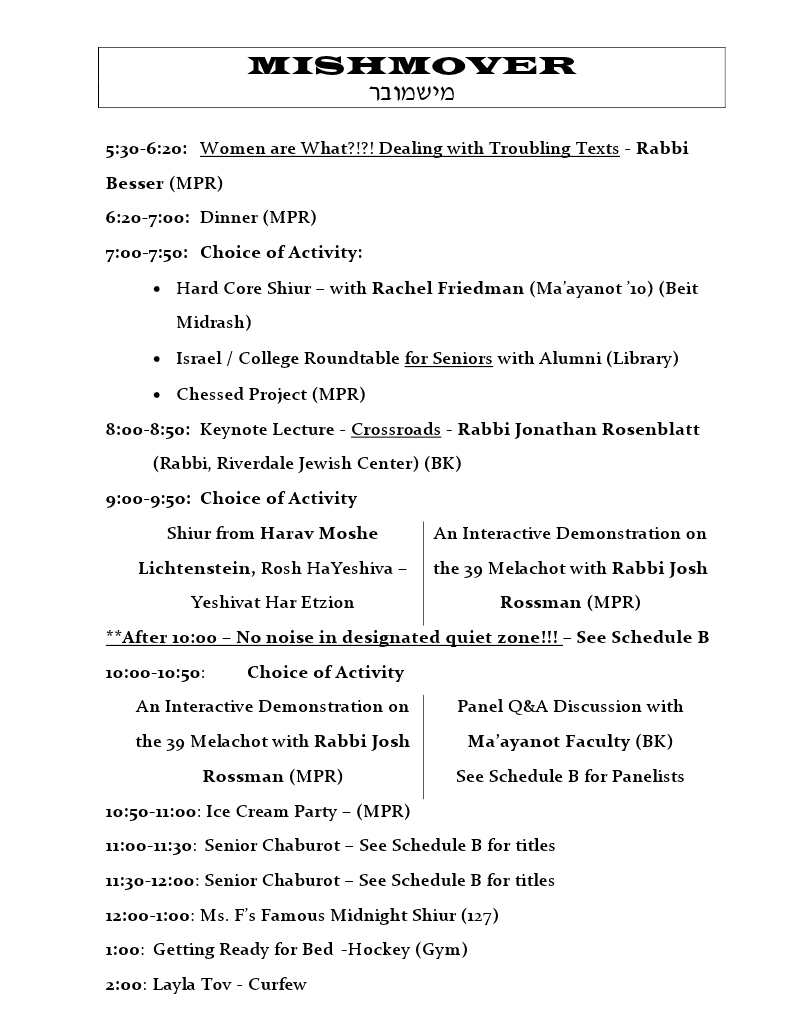
For those of you who missed all or some of it, here's a brief recap of Thursday nights festivities:

First, in a shiur entitled "Women are What?!?! Dealing with Troubling Texts," I got myself into some trouble by learning a גמרא that got everyone pretty upset, but hopefully in resolving the problem, we learned a general approach to dealing with sources in the Torah that we find troubling.

After a delicious dinner (thank you, EJ's), we had a choice of activity.  Ma'ayanot alumna Rachel Friedman gave a terrific shiur "Is There Such a Thing as a Bad Question: The Mysterious Saga of Rav Yermiah" to almost 30 Ma'aynoters.  Next door, some of the 14 alumnae who attended Mishmover shared their wisdom with the seniors over a round-table discussion about the year in Israel & college.  Finally, most of the students chose the chesed activity of making bead decorations for kids in need (thanks, Mrs. Weiner & Tali).

Rabbi Rosenblatt was, as always, a real treat.  In a talk entitled "Crossroads," he analyzed the mixed emotions that Yaakov felt as he left C'naan to go see Yosef in Mitzrayim.  He discussed how sometimes even when things are going best in our lives, and we stand on the threshold of great new opportunities, we feel our subconscious insecurities creeping back in (Friday morning I heard about a student who fell asleep in class, only to be awakened by a whiny "Yaakov Yaakov").  Elisheva Cohen dealt with a similar theme this week in another fine issue of Talelei Orot.

After that, we heard a shiur from the Rosh Yeshiva of Yeshivat Har Etzion, Harav Moshe Lichtenstein.  He got us all ready for Asarah B'Tevet with a classic chakira about the nature of Asara B'Tevet as either a yom avelut or yom teshuva.  He traced this dispute from the Tana'im to the Rishonim.  He concluded with poignant mussar about our ability to truly feel the pain of human suffering that occurred hundreds of years ago.  Just as we are able to cry with terror victims half way across the world, our emotions must cross the barriers of time as well as distance.

Simultaneously, Rabbi Josh Rossman was entertaining a large portion of the student population with his interactive presentation demonstrating some of the 39 melachot.  To get a feel for this popular and informative program, see Rabbi Rossman's website here.

A highlight of the evening was our teacher panel at which Ms. Gordon, Ms. Kur, Mrs. Kahan, Mrs. Cohen, Ms. Appel & Mrs. Slomnicki shared there thoughts on a wealth of topics including aliya, theodicy, how much of the secular world to let into our lives and their favorite movies (Shawshank, Dead Poets Society, Spiderman II, Awakenings, pass & Gattaca respectively - how did you get that through, Rachel?).  Thanks to Mrs. Block for expert moderation.

After an all-star lineup of Senior Chaburot and with Ms. F's famous midnight shiur about to begin, it was time for me to head home for a few hours (RZP still had some good schmoozing to go).

All in all, over 150 people participated in the biggest (& IMO best) Mishmover ever.  Thanks to the Torah committee (especially Tzippora), Rabbi Prince & Ms. F for their hard work.  Same for the custodial staff who went beyond the call of duty.  Yasher koach to all of the speakers & panelists who participated as well as the alumnae who helped out.  Most of all, thanks again to Michal Novetsky, who as a student came up with the idea for Mishmover several years ago.

Tuesday, December 4, 2012

MSP Launch - Shoe-less Cops & Rabbis

The title is of course an homage to the socked scholar, RZP.

On Thursday evening, the newly formed Ma'ayanot Scholars Program had its first event.  It was really exciting to have so many students (almost 50!) stepping up, staying after school, committing to taking a leadership role in the school, to taking on a significant Torah Lishma project and infusing a major bolt of energy into our Torah community.  Mrs. Kahan did a great job capturing how heartening this is for those of us who have dreamed of a program like this for a long time.

The highlight of the night was a shiur by Rabbi Prince's Rebbi, Rabbi Azarya Berzon who gave a terrific shiur on matters of Chanuka (you can find his shiurim here, here and here).  I was struck by the following story (which I found here)

One night, during the month of Elul, the month reserved for serious introspection and extreme exactitude in all mitzvos as preparation for the High Holy Days, the Alter of Kelm, Horav Simcha Zissel Braude, zl, had a dream. In the dream, he envisioned that Rabbeinu Yonah, the Rishon who authored the Shaarei Teshuvah, the handbook for repentance, was coming to Kelm to give a shmuess, ethical discourse. Imagine, Rabeinu Yonah himself would speak in the city known for its singular devotion to spiritual integrity, meticulous observance of mitzvos, and character refinement during the month of Elul! This was the opportunity of a lifetime. The time was announced, and word was spread throughout the town. At the appointed time, every Jew in Kelm had arrived and waited patiently, excitedly and with great trepidation to enter the bais hamedrash where the sage would hold forth. Understandably, the
paragon of mussar, ethics, was waiting to enter. The guard at the entrance to the beis hamedrash asked the Alter to identify himself, which he did. One can only begin to imagine the surprise and eventual shock and dismay when the guard did not permit the Alter to enter. "How could this be?" the Alter asked. "I must enter." He began to beg, relating the many z'chusim, merits, he had. He called forth the multitudes of students he had directly or indirectly influenced, his meticulous observance of mitzvos, his illustrious lineage; none of this seemed to impress the guard. Nothing moved him. Rav Simchah Zissel was not going to gain entrance to the shmuess. Finally, the teacher exclaimed, "You should know that my son is Rav Nochum Velvel!" When the guard heard whose father he was, he immediately allowed him to enter the bais hamedrash. It was at this point that the Alter woke up. Disturbed, he immediately called for his saintly son and related the dream to him: "What merit did you have that superseded every argument that I presented? What did you do that was so unique that only because of your merit was I permitted to enter?" Clearly, the Alter had taken his dream quite seriously. When Rav Nochum saw that his father was quite agitated, he related the following story.
Apparently, for quite some time, Rav Nochum had been wearing a pair of thread bare, worn out and torn shoes. There was limited money, and whatever money they could scrounge, shoes were simply not a priority. Once, he had occasion to be at the shoemaker's shop and he saw an excellent, sturdy pair of shoes for sale. Realizing that the price of the shoes would put him back a bit, he decided to save for them. Every week, he would put away a few pennies which he was able to hoard. Finally, the day came, and with great excitement, Rav Nochum took his savings, proceeded to the shoe store and purchased the long awaited pair of shoes. He could now walk wearing sturdy shoes that would allow him to have the necessary support with a certain degree of comfort.
Shortly thereafter, on a freezing cold wintry night, he heard a feeble knock at his door. He rose
from his studies to answer the door, to be greeted by a poor man who was going door to door begging for alms. The man was dressed in tattered clothing with not even a coat to protect him from the inclement weather. Rav Nochum motioned him to come into the house and gave him a warm drink. As the man stood up and was about to leave, Rav Nochum noticed that he was not wearing shoes.  Furthermore, his feet were bloodied and blistered, frostbitten from the cold and snow. "Where are your shoes?" Rav Nochum asked. "They are not my first priority. When one does not have what to eat, he first seeks to calm his hunger pains, then he worries about shoes," the man replied. Rav Nochum did not flinch for a moment. He immediately removed his shoes and gave them to the poor man. "Here you surely need them more than I," he said.
Rav Nochum turned to his father and said, "Probably it was that act of chesed that earned me
the merit, so that you could enter the room to listen to Rabbeinu Yonah's shmuess."
When one performs acts of chesed with no ulterior motive other than to help his fellow Jew, it
demonstrates his overwhelming love for Hashem and His children. Such a selfless act of kindness has the capability of catalyzing an incredible spiritual flow of Heavenly mercy for himself and for the world.
Just a day or two later I found this article in the Times about a modern day version of the story:
Officer DePrimo, 25, who joined the department in 2010 and lives with his parents on Long Island, was shocked at the attention. He was not warned before the photo went online; the department had not learned which officer was in the picture until hours later.
The officer, normally assigned to the Sixth Precinct in the West Village, readily recalled the encounter. “It was freezing out and you could see the blisters on the man’s feet,” he said in an interview. “I had two pairs of socks and I was still cold.” They started talking; he found out the man’s shoe size: 12.
As the man walked slowly down Seventh Avenue on his heels, Officer DePrimo went into a Skechers shoe store at about 9:30 p.m. “We were just kind of shocked,” said Jose Cano, 28, a manager working at the store that night. “Most of us are New Yorkers and we just kind of pass by that kind of thing. Especially in this neighborhood.”

Sunday, November 25, 2012

HEC Thanksgiving Video

Enjoy it.  Did anyone video Rabbi Glasser's talk?


Inspiration from an Unexpected Source

A while back during Monday Morning Mussar, I quoted a passage from Andrei Agassi's autobiography "Open" about the challenges of maintaining effective teshuva.  Here it is, tell me what you think:

Change.
Time to change, Andre. You can’t go on like this. Change, change, change—I say this word to myself several times a day, every day, while buttering my morning toast, while brushing my teeth, less as a warning than as a soothing chant. Far from depressing me, or shaming me, the idea that I must change completely, from top to bottom, brings me back to center. For once I don’t hear the nagging self-doubt that follows every personal resolution. I won’t fail this time, I can’t, because it’s change now or change never. The idea of stagnating, of remaining this Andre for the rest of my life, that’s what I find truly depressing and shameful. 
And yet. Our best intentions are often thwarted by external forces—forces that we ourselves set in motion long ago. Decisions, especially bad ones, create their own kind of momentum, and momentum can be a [pain] to stop, as every athlete knows. Even when we vow to change, even when we sorrow and atone for our mistakes, the momentum of our past keeps carrying us down the wrong road. Momentum rules the world. Momentum says: Hold on, not so fast, I’m still running things here. As a friend likes to say, quoting an old Greek poem: The minds of the everlasting gods are not changed suddenly. 
By the way, the rest of the book was also surprising good and thought-provoking - I highly recommend it, even if you don't care about tennis.

Thursday, November 22, 2012

Is Turkey Kosher?


Yasher koach to Rabbi Prince, Rabbi Glasser and HEC for sending us into the long weekend with a Torah perspective on the holiday.  With that in mind, check out some of Why-aanot's greatest Thanksgiving hits, including this article, a link to the New York Times, and a great post from Mrs. Cohen 2 years ago about Thanksgiving in Israel.  This year, check out this article by Rabbi Ari Z. Zivitofsky on whether or not turkey is kosher (you better read fast before dinner starts).  Maybe next year we can talk about whether football is kosher.

While we're appreciating what we have (Modim anachnu lach), it's a good time to remember those who are having a more difficult weekend.  My wife saw an amazing idea on Facebook.  Just a few minutes ago, she called a pizza store in Kiryat Malachi and ordered a pizza & soda for any family that the store owner thought could use a pick-me-up.  It was great.

Finally, I want to remind you all about our annual Black Friday Shiur tomorrow morning with Mrs. Samuels at 10:00 am at Mocha Bleu.  I gave the shiur last year, and we had a really nice mix of students from various grades, alumni and parents.  Kol hakavod to those of you who choose to spend your free time learning.
אנו משכימים והם משכימים...

Sunday, November 4, 2012

Hurricane Sandy - the Aftermath by Charlie Harary


Hurricane Sandy: The AftermathTali Spier sent along this excellent article by Mr. Charlie Harary, who we all remember from his visit last Ta'anit Esther.  Enjoy it.  It offers much to think about both for those of us with power, and those in the dark.

Hope to see you all tomorrow.

Tuesday, October 30, 2012

It Was a Dark and Stormy Night...

A couple of Hurricane related thoughts:

  • We got lucky with the timing (I don't mean missing three days of school) that it came after open house Shabbos.  See here for halachik guidelines from Rabbi Kenneth Brander (reflecting the decisions of Rabbi Herschel Schachter) for a Shabbos hurricane.
  • Hearing all the warnings about how Atlantic City needed to evacuate in anticipation of being wiped out by the waves, the Parsha immediately came to mind.  Were the evacuees told not to look back?  I hope there are no stray pillars of salt along the New Jersey Turnpike.
  • With school being cancelled for the third straight day it reminded me of the Gemara (Bava Kama 82a) that when the Torah says that the Jews went three days without water, on a drash level, it is a reference to Torah.  This is one of the reasons why we read the Torah on Mondays and Thursdays - to ensure that we don't go three days without learning.  While I assume that you all have Torah built in to your Shabbos & Sunday schedules (especially this past week at what I heard was a rocking good time at the Sadeks - thanks to Gali &Yocheved  & YK RZP), these "snow days" are a challenge.  I'm sure that Freshmen & Sophomores have been studying for their halacha tests, but for the rest of you, please make use of the links on the side of this blog (or any other Torah source) to keep things on schedule.
  • Towards that end, here is Mrs. Schapiro's post on Vayera from last year, and an interesting debate between Rabbi Eitan Mayer and me against Rabbi Shlomo Riskin and (Ma'aynaot alum) Ayala Carl about the akeida.  For more from Rabbi Mayer (and Mrs. Herzog!) on the akeida, see here.


Thursday, September 20, 2012

What Did We Do Now?

Tzipporah Rossman asked the following question: During maariv on motzei Yom Kipur we say "slach lanu avenu ki chatanu." Why do we say this if Hashem just forgave us for everything, and we don't have anything yet to ask for teshuvah?

What a great question! Rav Chaim Feuer provides a great answer in the excerpt below. As Rav Chaim Feuer explains beautifully, each day should bring a new and deeper level of understanding of our old sins and of our relationship to Hashem. Therefore, teshuva is always necessary, even for our old sins for which we have already done teshuva. When we view our old sins from a fresh perspective, we have an opportunity to do a different kind of teshuva for them, one that is directed at another aspect of the sin we may not have noticed before. Therefore, even though we are involved in the teshuva process for the entire duration of Yom Kippur, and are hopefully granted forgiveness for all of our sins, it is still necessary to say "v'hashivenu avinu l'toratecha" and "slach lanu avinu ki chatanu" immediately thereafter, so that we can continue the teshuva process while viewing our old sins from a new perspective.