Friday, October 25, 2013

Alphabetical Parsha Challenge: פרשת חיי-שרה


א Where did אברהם’s servant go to find a wife for יצחק?
ב Whom did אברהם approach to buy a burial place for שרה?
ג When speaking to the people about buying a burial place, אברהם refers to himself as a _______________
ד One of אברהם’s grandchildren from his wife קטורה:
ה Who was שרה’s Egyptian handmaid?
ו רבקה’s family blessed her by saying, "אחתנו את היי לאלפי רבבה __________________ את שער שנאיו"
ז אברהם’s servant is described as ______________________
ח One of the children of ישמעאל:
ט Rivka’s appearance is described as _____________________
י אברהם’s servant makes an oath to him by placing his hand under אברהם’s _____________
כ אברהם did not want his son to marry a woman from ______________
ל Who ran out from the house to greet אברהם’s servant at the well?
מ How old was שרה when she died?
נ One of the gifts which אליעזר gave רבקה:
ס אברהם paid for מערת המכפלה and the field it was in with 400 silver shekel "עבר ל_____"
ע Which individual owned the specific burial place that אברהם wanted to buy?
פ Although אברהם gave all that he owned to יצחק, he still gave presents to the children of his ___________
צ When רבקה saw יצחק for the first time, she covered herself with this:
ק Where did שרה die?
ר Which girl was chosen as a wife for יצחק?
ש How many princes of nations descended from ישמעאל?
ת What did רבקה’s family provide for the camels of אברהם?

Thursday, October 3, 2013

Alphabetical Parsha Challenge - פרשת נח

Each of the answers to the questions below is a Hebrew word or phrase beginning with א and proceeding through the alphabet in the order of the א-ב.  Learn through the parsha to find the answers!
Anyone who hands in a completed set of answers to me on Monday will be entered into a raffle to be held every other week for a small prize.  Discuss the questions with your family at the Shabbos table, do them on your own, or even with a friend!  The key is to open up the parsha and skim through it.  Happy learning!
א Where was Haran born?
ב What city was so named because there Hashem confused the language of all the earth?
ג From what kind of wood was the teivah built?
ד The world in the generations after the flood is described as being of one language and _______  ______
ה Where did the teivah come to rest?
ו We are told that שרי was barren (עקרה) and did not have a _________
ז Noach had to bring two of each (non-tahor) animal, and they had to be __________  ___________
ח Hashem decided to destroy the world because the world was filled with:
ט Noach had to bring 7 males and 7 females of which type of animals?
י What nation is descended from יפת?
כ What was the teivah covered with?
ל Who was הרן’s son?
מ What did Noach make when he left the teivah?
נ Who was described in this parsha as a גבור ציד?
ס What city is mentioned in the description of the borders of the כנענים?
ע What was the first bird that Noach sent out?
פ What ברכה does Hashem give Noach and his children after the flood?
צ What furnished the light for the teivah?
ק What is the sign of the ברית that Hashem made with Noach?
ר What measured 50 אמות?
ש How old was Noach when the מבול began?
ת Which individual in the parsha had a father and son with identical names? (And do you know what that name was?)

Wednesday, September 25, 2013

Alphabetical Parsha Challenge: פרשת בראשית

Look for these questions every week on Thursdays on the blog and in hardcopy in Maayanot.  Learn through the parsha to find the answers.  Anyone who fills in all the answers and submits a completed questionnaire on Monday will be entered into a raffle for a small prize which will be held every other week. You are welcome and encouraged to discuss the questions with your family at the Shabbos table, answer them on your own, or together with a friend.  The key is to open up the Chumash and learn the parsha while looking for the answers!  

Each of the answers to the questions below is a Hebrew word or phrase beginning with א and proceeding through the alphabet in the order of the א-ב.  See how many you know offhand, and learn through the parsha to find the rest.  Happy learning!

א  What was created on the first day?
ב Man is special because he was created "____ _____"
ג What was the name of one of the 4 rivers that came out from גן עדן?
ד What will grow from the ground as a result of the curse that אדם got after he ate from the עץ הדעת?
ה What answer did קין give Hashem when Hashem asked him where הבל was?
ו The phrase that is repeated on יום שלישי which appears only once on most other days is …?
ז What was found in ארץ החוילה?
ח What did אדם & חוה make for themselves after they ate from the עץ הדעת?
ט When Hashem looked at the world at the end of the 6th day, what was His evaluation of it?
י What is the first statement that Hashem makes in the Torah?
כ What did Hashem make for אדם & חוה to clothe them?
ל What did Hashem call the חושך?
מ What is the name of the person with the longest lifespan?
נ What was קין’s punishment?  He will be….
ס Fill in the missing words: "זה ___ _____ אדם, ביום ברא אלקים אדם..."
ע What is the word that is used to describe the נחש?
פ What was the b’racha that Hashem gave to the fish and birds?
צ What was the name of one of the wives of למך?  (Not עדה)
ק What was the name of אדם’s oldest child?
ר What divided the upper waters from the lower waters?
ש What was the name of אדם & חוה’s third son?
ת
 What did Hashem cause to fall upon אדם right before He created חוה?

Monday, April 22, 2013

Ma'ayanot Nachas

See here for a profile of alumna Margot Reinstein.  Keep making us proud.


Name: Margot Reinstein
Hometown: Teaneck, New Jersey
Passion: Jewish Education
When you look back at your college career, what experiences have made the deepest impact on you?
The very first class I took at Stern College was with Rabbi Mordechai Cohen, professor of Bible. From the very beginning, he urged us to take advantage of everything Yeshiva University had to offer. He challenged us to go to an event once a week, write an article for a student newspaper, seek out professors and speak with them after class, stay in for Shabbos, take the most rigorous classes we could handle and become active members of the YU community.
Margot ReinstenHis words have always stayed with me. They certainly affected my approach to college. I wanted to be involved in everything, from the Beit Midrash Committee to the Social Justice Society to the Israel Club and everything in between. In my second year I became president of iGive, a club that my co-president, Chana Weinstock, and I revamped to make sure there were consistent daily and weekly chesed opportunities for students, as well as programs like Simcha Deliveries, Yachad Carnivala and Cake Wars—a cake-decorating competition we helped create that raises funds and awareness for breast cancer.
After realizing the impact that even one club could make, I decided to run for president of the Torah Activities Council, whose mission is to create a more vibrant Judaism on campus. With 26 clubs under its auspices, we work to enhance the religious and spiritual life of every student on campus.
You’re a Legacy Heritage Fund Scholar, which means you decided to major in Jewish education very early on. Why?
Education is power and I think it’s the most important value you can have. As the grandchild of four Holocaust survivors, I’ve internalized how integral Jewish education is to the continuity of the Jewish people. Having grown up with five foster siblings, I learned at a young age that every Jew is a treasure. I wanted to become a Jewish educator to spread my passion for Judaism and love of learning to others. Initially I had planned to make aliyah right after high school, but when I learned about Stern’s incredible education programs and especially the Legacy Heritage Fund Scholarship, I realized Stern was the right place for me. [The program provides full tuition support in the form of grants and forgivable loans for undergraduate study and also includes one-on-one mentoring, professional development, intensive Hebrew language instruction and substantial fieldwork experience.]
A dream of mine would be to travel around the world observing the methodologies of schools and universities in different countries and communities. Then I’d make the trip again, staying for some time in each place to improve each institution.
What accomplishment during your time at YU are you most proud of?
The response of the student body after Hurricane Sandy.
Thousands of people only a few blocks away from Stern didn’t have heat, food, water or light. I recognized that as TAC president, I could really do something. I called Adina Poupko in the Office of Student Life and asked her if I could organize a mission, despite the fact that it usually takes at least two weeks to put an event together. Adina basically said, “Margot, this is an emergency situation. Use your resources however you can. We trust you.”
Her words empowered me. Within a few hours, with the help of YU’s Center for the Jewish Future (CJF), we had ordered a bus, close to $2,000 worth of supplies had been sponsored by the student councils and more than 50 students had signed up to join our mission. As we carried cases of water up flights of unlit stairs in buildings where elderly people lived on the Lower East Side, we saw the difference we were making then and there.
What will you be doing next year?
I’m deciding between two really special opportunities. One option is to spend time in Israel pursuing a master’s degree in Tanakh while teaching. I want to spend more time learning and improving my Hebrew so that I can come back to America and be the best educator I can be.
Another option I’m considering is living in Moscow for a year to create more educational and inspirational programming for the students there and provide care for Holocaust survivors. After spending my first winter break on a mission to Kharkov with the CJF, I was so inspired by the people I met there that I actually returned twice over the next two years and have developed a strong relationship with that community.

Thursday, April 18, 2013

Big Questions


Pammy Brenner submitted a bunch of questions to the blog - here are some responses:

Hello Pammy,

These are wonderful questions. I’ll try to address each one but the most important thing I’ll do is direct you to sources which will be far more helpful.

1. How does one reconcile science with Torah? To what degree can one accept scientific beliefs?

This is a broad sweeping and  great question and one that all religions in the world (most likely the majority of people on Earth) have to address.

Paraphrasing a friend of mine getting a PhD in cell biology in NYU, there are many theories raised and rejected in scientific research. Many “facts” are later disproven. So, it’s important to think of science as a dynamic area rather than something fixed.

Also, some areas of science work beautifully with the Torah and other areas of science pose, at least at first glance, a challenge to Torah. The scientific fact that the moon waxes and wanes and the sun setting work fine with the Torah. But the age of the universe, evolution, and miracles do require some more thought.

Let me be clear, there are many sophisticated and learned Jews who believe in science and the Torah. I do strongly believe one can reconcile or live comfortably in both worlds.

Before I go on I urge you to watch the debate at this link. The debate is between R. Lord Jonathan Sachs, the chief rabbi of England, and Richard Dawkings, a scientist and ardent and public atheist. Although they raise many fascinating issues their central debate is about if or how science and religion can coexist. 

I’m going to address three of what I believe to be the most challenging religion-science issues:

1.      Age of the Universe: to quote people smarter than I (maybe R. Lord Jonathan Sachs) science tells humanity the “what” and “how” and religion tells humanity the “why.” Or, to put more poetically: science tells humanity how we got here and religion tells humanity what to do once we’re here. Hence, the goal of prakim 1-2, the creation story, in Sefer Bereshit, is not to tell us how single celled organisms became dinosaurs but rather it is meant to teach us values and religious messages.

Why would G-d mislead us and tell us the world was created in seven days if it wasn’t? I don’t have a definitive answer but four thousand years ago a more detailed version may have been too confusing, or to convey the values most effectively a shorter seven day version of creation was necessary. But, most centrally, once one makes the paradigm shift that the Torah isn’t primarily concerned with science this becomes a less bothersome question.

2.      Evolution: This answer is for evolution but also for the age of the universe question. We believe that the world is 5773 years old. However, science declares that the world and the evolution of humanity took billions and millions of years respectively. One approach is to claim that each day of early creation was really a stage of creation. So, while we have 5773 years, that is from a point when Adam had evolved from some less developed being. Hence, billions of years may have elapsed from day one to day six.

3.      Miracles: There seem to be two schools regarding how to understand miracles. Some rationalistic thinkers claim that G-d may have woven miracles into the natural order. This seems to have great support from the Mishna in (Avot 5:6) where it says that G-d created certain miracles right before the end of the six days of creation. If so, while miracles break the normal order they do not break the natural order. A more common approach is that indeed G-d who created the world can suspend elements of the natural order in certain instances. I don’t think that this needs to be a fundamental conflict. One can champion miracles and still, in 99% of cases, believe that science guides the world.

It should be noted that the answers above assume that one need not reconcile the conflict. However, there are number of Jewish scientist who attempt to fully reconcile science with religion.

Here are some books to read which adopt the “reconcile” approach:
1.      Dr. Gerald Schroeder- Genesis and the Big Bang, The Science of God and The Hidden Face of God

3. How closely should we follow the Torah Umadda philosophy? How much "Madda" are we allowed to let into our daily lives? How much are we supposed to incorporate into our Torah views of the world?

Early on in my years at Gush I spent a Shabbat with a friend who was in a yeshivish yeshiva. This was a yeshiva that looked very unfavorably upon general studies. On Friday night I ate by the head of the yeshiva. Immediately, upon telling him that I was learning at Gush, he commented in a mocking tone: “Oh, the literature yeshiva!” I was shocked but I learned, and since then I’ve come to see it more clearly, that most religious Jewish communities look down upon college education and are staunchly opposed to non-practical general studies, English, history, etc.

Over the years my understandings and feelings of this topic have evolved but I think what I experientially knew to be true in high school is what guides my thinking about this topic today.

People often begin this conversation the wrong way. People ask: is it muttar or assur to read Shakespeare? The starting point should be different: how can you be the best human you possibly can be? And, of course, “the best human” from an Orthodox perspective means having a deep relationship with G-d.

However, what does it mean to have a relationship with G-d? I won’t fully answer it now but it must include becoming the best person possible. A person who is deep and passionate and caring and honest etc. etc. etc.

How do you get there? For some this means full time learning. For others it means chessed. For others it means making tons of money and giving it all to tzedakah. For others it means maddah.

There is no chiyuv to learn maddah. And in fact, for many people I wouldn’t push them to learn maddah. But I do believe that many of those people could gain from maddah. Maddah is a way to work both the mind and heart in powerful ways.

It is clear, however, that Torah is both the most direct way to a relationship with G-d and to the development of one’s humanity. And it is this point where people often start the conversation: How does one justify reading Shakespeare when a more direct root, Torah, exists? Each person must craft a meaningful and honest balance of Torah, the most direct way to reach G-d, and maddah, a less good way to reach G-d. Some people are wired in a way that hiking in nature creates inspired moments and others a beautiful poem.

Let me highlight this with two personal anecdotes:
1.      When I was younger I went with my family to Les Miserables (now it is something I wouldn’t do because of my understanding of the halachot of kol isha). While my guess is that most people know the storyline I’ll summarize it quickly. Jean Valjean, the protagonist, who suffered in prison for nineteen years for stealing a loaf of bread, is caught stealing from a kind Bishop who invited Valjean to spend the night with him. The Bishop defends Valjean against the police and, in a moving song which ends up inspiring Valjean to change his life, the Bishop sings: “What we have we have to share….” Chazal certainly speak about the value of generosity. But the Bishop’s (a Bishop mind you!) beautiful voice in the context of a very moving story allowed this phrase to impact me greatly. When I think about themes of chessed and giving this phrase comes to mind. I now know more sources and more halachot of chessed etc. but the emotional pull to do chessed comes in some part from what I experienced while watching Les Miserables.
2.      The Tannach and Gemarah are full of discussions about death and mourning. Some of them I know and some I don’t. However, reading Edgar Allen Poe’s The Raven gave me both intellectual and, more importantly, emotional insight into the haunting feeling of pining for a lost loved to return.

An amazing article which addressed this topic in a thorough and sophisticated fashion is R. Lichtenstein's "Torah U'Madda: Congruence, Confluence, and Conflict" printed in Judaism't Encounter with Other Cultures: Rejection or Integration? (1997).

Good luck,
R Yair Hindin

Tuesday, April 16, 2013

One More on Yom Hashoa

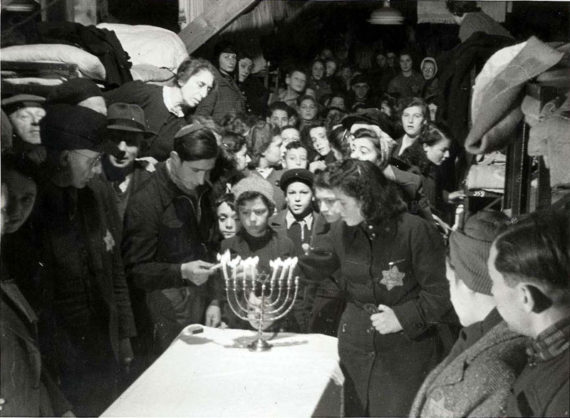
Here is a short film about a Holocaust survivor, who won an Osar for co-producing Schindler's List, going back to Auschwitz for the Bar Mitzvah he never had.

Sunday, April 14, 2013

Friday, April 12, 2013

Not your Typical Holocaust Photos

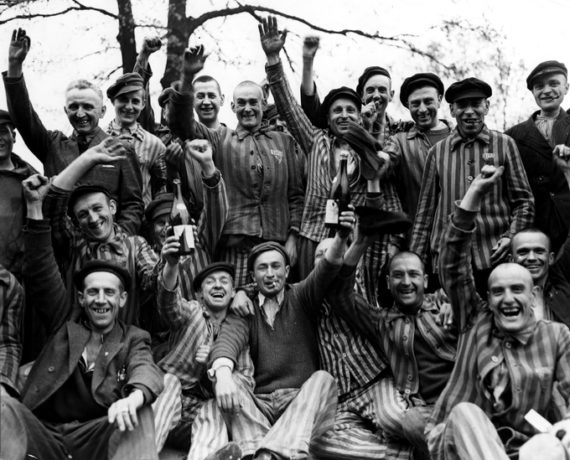
lesson6_31MargaretBourke-campIt's a bit late after Yom Hashoah, but when Mrs. Sinensky sent me this link, I had to post it here.  Check these pictures out for a very different perspective than the one we are used to.  They are remarkable.

Sunday, March 17, 2013

Aiding Agunot


Maaynot alum Layla Blenden sends along this important message:


Stern College has an Aguna Advocacy club that was started because of Tamar Epstein, a Stern graduate, who has been trying to get a get from her husband for a while.
Tamar's husband, Aharon Friedman, has the support of his mother, and there have been many attempts to convince her to insist that Aharon give Tamar a get, but so far, to no avail. There have been numerous rallies outside of Yaffa Friedman's house in attempts to break her down (I attended one a few weeks ago).
There was an article published recently, called "An Agunah Day Message To A Jewish Grandmother," which describes a the effects of the traumas of an aguna on her child(ren), which also affects the child's relationship with her grandmother (the mother of the me'agen). This article describes the exact situation of Tamar Epstein.
In further attempt to convince Yaffa not to support her son in making Tamar an aguna, it ORA (organization for the resolution of agunot) is trying to get as many people as possible to send this article to Yaffa, in hopes that the influx of letters coming in her mail will convince her. (See links below)
Tizku l'mitzvot!
-Layla Blenden
You can join the event on facebook at http://www.facebook.com/events/157079137781530/
Event description:
Want to make your fast more meaningful? Ta’anit Esther is International Agunah Day. YOU can help free Tamar Epstein, whose ex-husband Aharon Friedman refuses to give her a get. How? By letting Yafa Friedman, Aharon’s mother, know that her full support of his abusive get refusal is NOT OK.
What you can do:
1) PRINT Dr. Levmore's article* http://tinyurl.com/YafaFriedmanArticle
2) WRITE a respectful letter of your own (optional)
3) SEND it to Yafa Friedman, 1812 E. 12th Street, Brooklyn NY 11229
*The Jewish Press recently published a moving article by Dr. Rachel Levmore entitled "An Agunah Day Message to a Jewish Grandmother." The article artfully addresses an anonymous mother of a recalcitrant husband, beseeching her to realize her responsibility to put her foot down and insist her son give his ex-wife a get lest she lose a true, loving relationship with her granddaughter down the road. But let's be real: this article is not speaking to some anonymous grandmother; it is clearly addressing Yafa Friedman. JOIN US in sending a loud and clear message to Yafa that her continued support of Aharon Friedman is unacceptable and that she holds a unique power to end this tragic saga.
YOU can help make a difference!


Monday, March 11, 2013

Torahton Schedule

An all-star lineup, hot off the presses! RSVP here.  See you there.


TORAHTON 2013
At Congregation Bnai Yeshurun - 641 West Englewood Avenue
Friday Night:
6:55-7:55: Mincha, Kabbalat Shabbat                            
8:00-9:15: Dinner, Zemirot, Divrei Torah  
9:15-10:00: Shiur by Rabbi Moshe Tzvi Weinberg
          Hachodesh Hazeh Lachem: The “Chiddush” of the Jewish People
10:00–11:30: Tish, Singing, Divrei Torah

Shabbat Afternoon:
3:30-4:25: Shiur by Rabbi Ari Zahtz
          Chrain or Romaine: Exploring the Bitter Possibilities
4:25-4:35: Snack / Break
4:35-5:25: Shiur by Mrs. Shira Schiowitz
Ancient Romance Novels? Is Shir Hashirim a Love Story?
5:30: Mincha
6:00-: Shiur by Yaffa Stone & Sara Kinstlinger
          Hilchot Superheroes: Real Halacha for Fictional Characters
6:40: Seudat Shlishit , Zemirot, Divrei Torah  
7:45: Maariv, Havdala

Torahton Memories

Here.  Let's make some new ones this weekend.

Torahton 2013 & Massive Mishmar!!!


Ma'ayanot's fourth annual Torahton will take place on Shabbat, March 15th – 16th, Shabbat Parshat Vayikra, in Teaneck, NJ. The students are invited to join us for this special opportunity to spend a Shabbat together that is filled with learning, friendship and fun. 

The Shabbaton begins on Friday night at Bnei Yeshurun with Kabbalat Shabbat and Maariv. The program continues with dinner, which will be followed by a shiur and an oneg. The Shabbaton will reconvene at Bnei Yeshurun on Shabbat afternoon with more shiurim and programming through seudah shlishit and havdalah.  All students are encouraged to attend the entire program, or any part that they wish. A detailed schedule will be available tomorrow.

In past years, one of the best parts of the program was the number of non-Teaneck residents who arranged to spend Shabbat at friends and participated in all of the programming.  If there is anyone who needs help finding a host, please let Rabbi Besser know. 

There is no charge for either of the meals or the rest of the program.  If you have any questions, please contact Rabbi Besser at (201) 833-4307 ext. 216 or besserd@maayanot.org.

If you plan to attend, please fill out the Google Doc here
 
We are especially excited this year to kick off the Torahton weekend with an exciting and interactive mishmar program on Thursday March, 14th right after school. A representative from the Kof-K will be coming in to address our students about contemporary kashrut issues. The program begins at 5:20 and will conclude by 6:15. Parents & alumni are welcome to attend! Light refreshments will be served.
Some of the topics include:
 
- Going into Starbucks or other non-exclusively kosher restaurants
- Can you buy ice cream or frozen yogurt from a chain store that has a hechsher but no mashgiach?
- Can you ever rely on the ingredients on a label to determine if something is kosher?
- Non-kosher gum and toothpastes
- Issues related to stadiums and street vendors (pretzels, chestnuts, etc.)
                                 And many more topics...